Effective church communication isn't about sending more messages — it's about reaching people where they are. Here's how to build a strategy that works in 2026.
Church communication has never been more complex — or more important. Members are bombarded with messages from every direction: social media, email, text messages, news apps, and more. In this noisy landscape, how does a church ensure its communications actually reach and resonate with its congregation? The answer lies in a deliberate, multi-channel church communication strategy that meets people where they are.
Why Churches Need a Communication Strategy
Many churches communicate reactively — sending an email when there's an announcement, posting on social media when they remember, printing a bulletin for Sunday. Without a strategy, communication becomes inconsistent, fragmented, and ineffective. Members miss important information because it was sent on the wrong channel, at the wrong time, or in the wrong format.
A communication strategy brings intentionality to every message your church sends. It defines which channels to use for which types of communication, how often to communicate, and how to measure whether your messages are reaching their audience. The result is a congregation that feels informed, connected, and engaged.
Understanding Your Communication Channels
Modern churches have more communication channels than ever before. Each has strengths, weaknesses, and ideal use cases. Here's a breakdown:
Text Messaging (SMS)
Text messages have a 98% open rate — the highest of any communication channel. They're ideal for time-sensitive information: service cancellations, event reminders, and urgent prayer requests. However, text messaging should be used sparingly; overuse leads to opt-outs. Reserve SMS for messages that genuinely require immediate attention.
Email remains a workhorse for church communication. It's perfect for weekly newsletters, event invitations, and detailed announcements. Email open rates among church members typically range from 30-50%, which is higher than most industries. Keep emails concise, visually appealing, and mobile-optimized, since most members will read them on their phones.
Social Media
Social media is your church's public face. It's where visitors and members discover what your church is about. Focus on one or two platforms — Facebook and Instagram are most effective for churches — and post consistently. Social media is ideal for sharing visual content, service highlights, and community outreach stories. It's not ideal for urgent or personal communication.
Digital Membership Cards
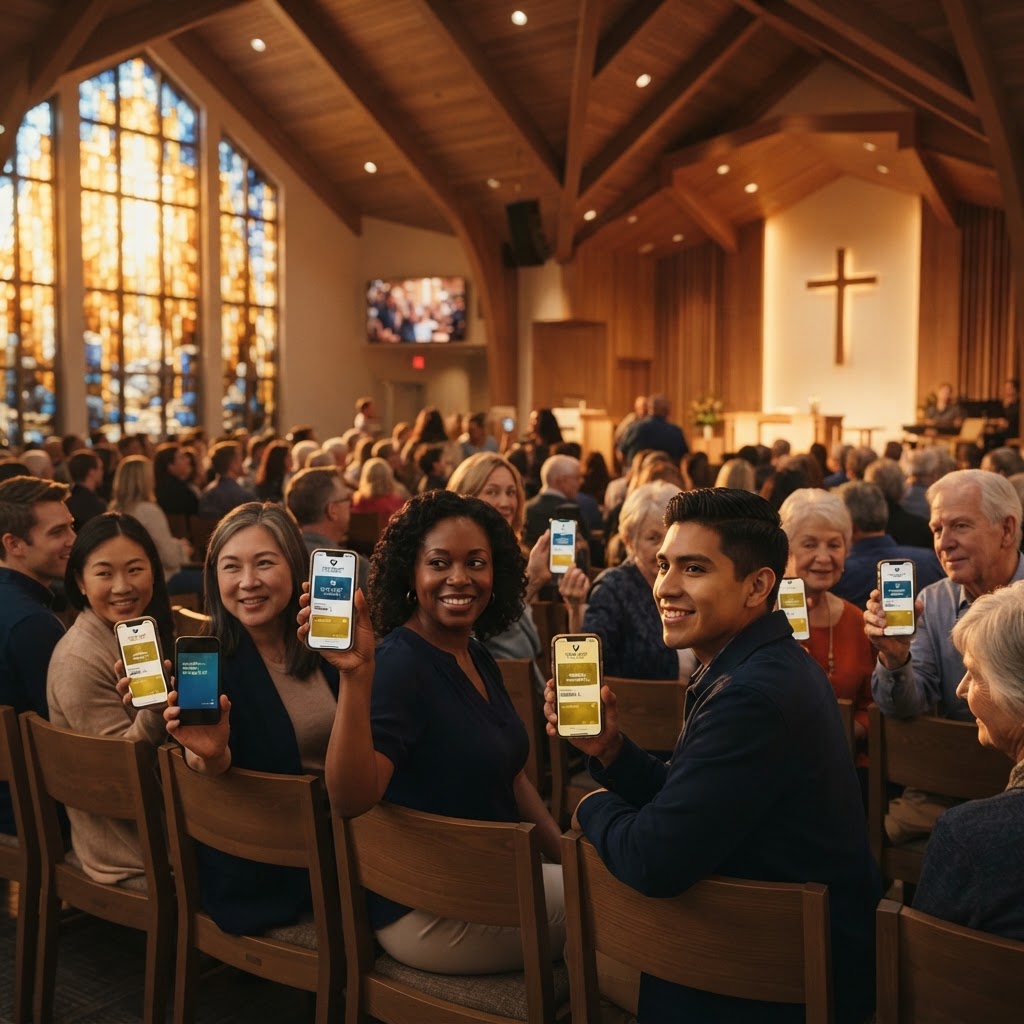
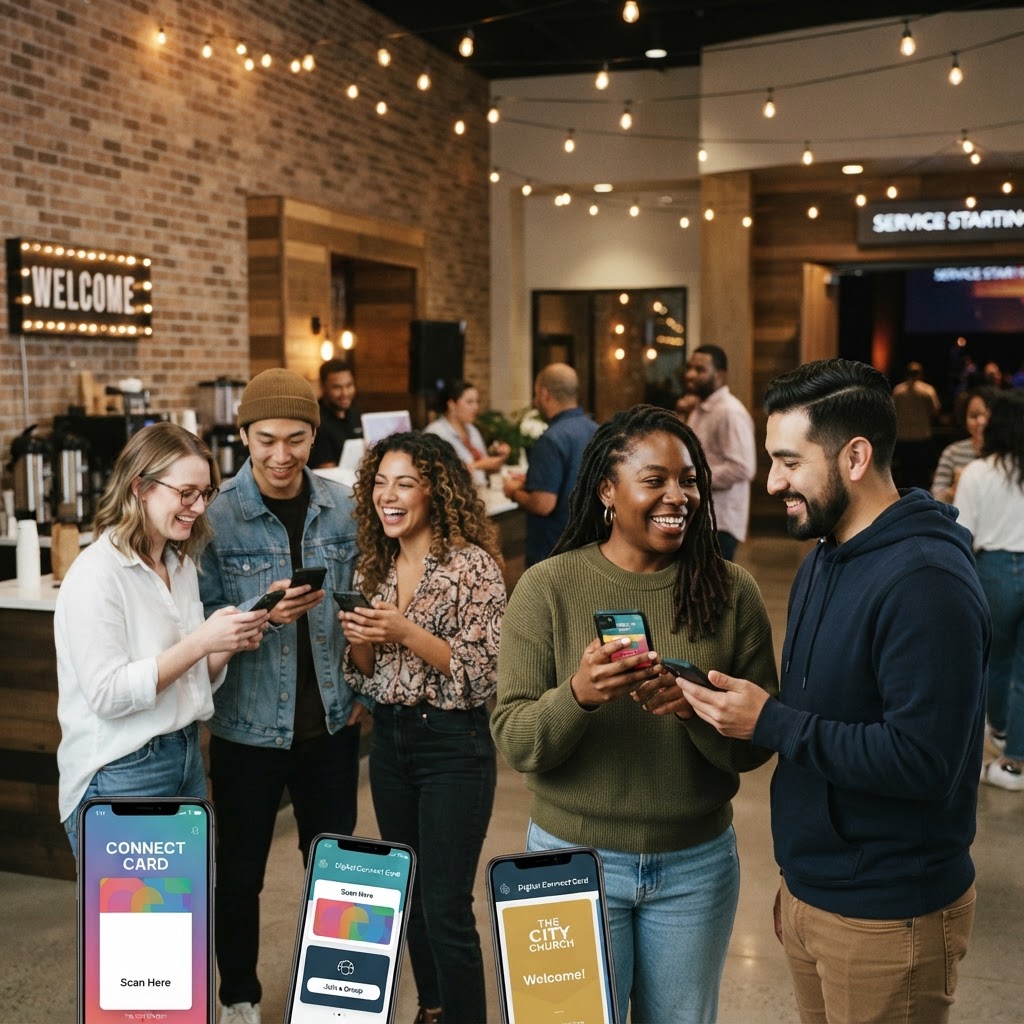
Digital membership cards are a unique communication channel. They don't push messages to members; instead, they provide a persistent, on-demand connection point. When a member has a pastor's digital card saved on their phone, they have a direct line to that pastor whenever they need it. Action buttons on the card — 'Give,' 'Register,' 'Pray' — enable immediate responses to ministry opportunities.
In-Service Announcements
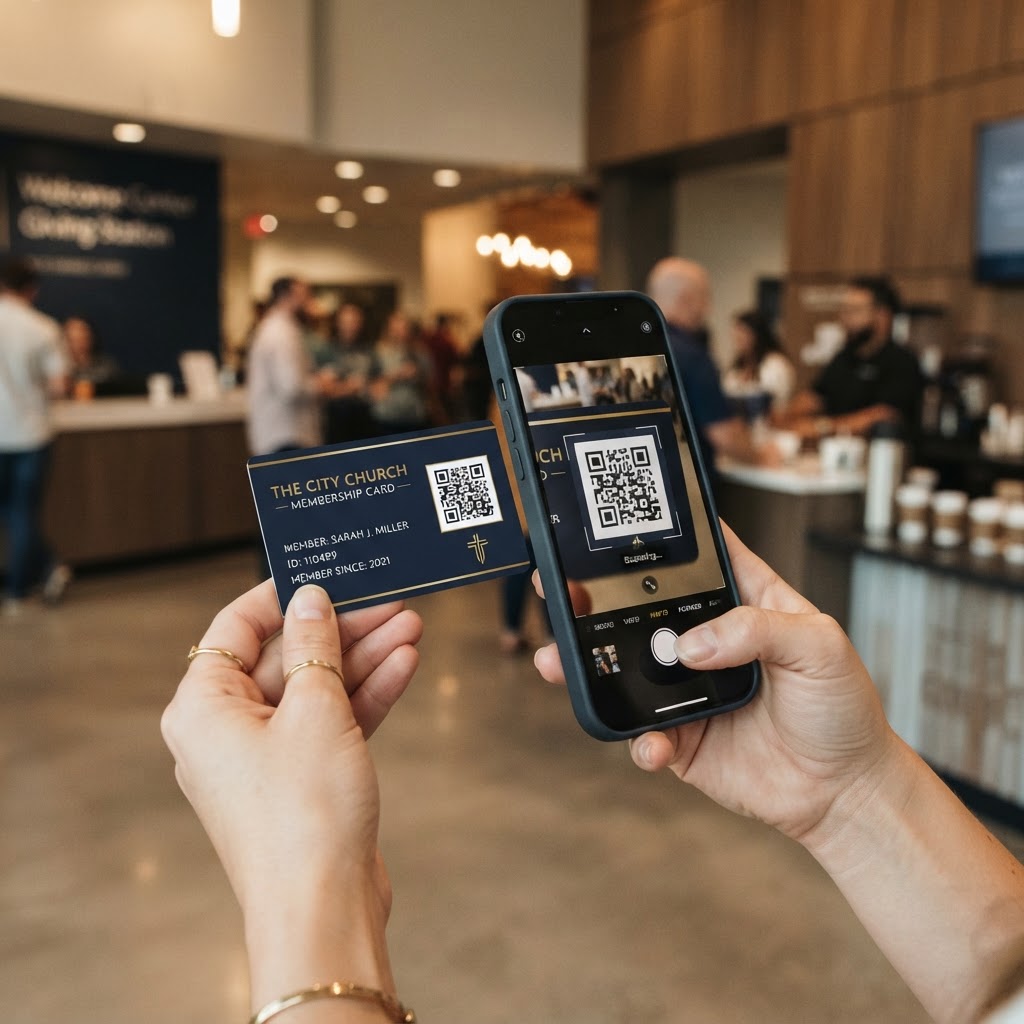
Sunday service announcements remain one of the most effective communication channels for important, time-sensitive information. The captive audience ensures your message is heard. Keep announcements brief, visual, and action-oriented. Use QR codes to direct people to digital resources rather than asking them to remember URLs or write down information.
Building Your Communication Calendar
A communication calendar ensures that your church communicates consistently without overwhelming members. Plan your communications on a weekly basis, mapping each message to the appropriate channel:
- Monday: Weekly email newsletter (events, announcements, devotional content)
- Tuesday: Social media post (behind-the-scenes or community highlight)
- Wednesday: Social media post (upcoming event or sermon series teaser)
- Thursday: Text reminder for weekend service or event (if applicable)
- Friday: Social media post (encouraging scripture or quote)
- Saturday: Text reminder for Sunday service (brief and welcoming)
- Sunday: In-service announcements and social media highlights
Adjust this calendar based on your church's rhythm and culture. The key is consistency — members should come to expect when and how they'll hear from your church.
Segmenting Your Audience
Not every message is relevant to every member. Segmenting your audience ensures that people receive information that's meaningful to them. Consider these segments:
- All members: Sunday service info, major church announcements, seasonal events
- New members: Welcome emails, membership class info, getting started resources
- Ministry volunteers: Schedule updates, training opportunities, team communications
- Parents: Children's and youth ministry updates, family events
- Visitors: Welcome follow-up, next steps, invitation to return
- Givers: Giving statements, stewardship updates, special campaign info
Segmentation reduces message fatigue and increases engagement. When members receive information that's relevant to them, they're more likely to pay attention to all your communications.
Timing Your Communications
When you send a message is almost as important as what you say. Here are general guidelines for optimal timing:
- Email newsletters: Send mid-morning on weekdays (9-11 AM) for highest open rates
- Social media posts: Post in the evening (6-8 PM) when members are scrolling
- Text messages: Send during business hours or early evening; never before 8 AM or after 8 PM
- Event reminders: Send 24-48 hours before the event, not on the day of
- Follow-up messages: Send within 24-48 hours of a visitor's first visit
Measuring Communication Effectiveness
You can't improve what you don't measure. Track these key metrics for each channel:
- Email: Open rate, click-through rate, unsubscribe rate
- Social media: Engagement rate (likes, comments, shares), reach, follower growth
- Text messages: Delivery rate, opt-out rate, response rate
- Digital cards: Card views, action button clicks, vCard downloads
- In-person: Attendance at announced events, verbal feedback
Review these metrics monthly and adjust your strategy accordingly. If email open rates are declining, try different subject lines or send times. If social media engagement is low, experiment with different content types. Data-driven communication is always improving.
Common Communication Mistakes to Avoid
- Sending too many messages — quality over quantity, always
- Using the wrong channel for the message — don't send urgent info via email only
- Inconsistent branding across channels — your social media, email, and digital cards should look like they belong to the same church
- Neglecting to segment — blanket messaging leads to disengagement
- Forgetting to follow up — communication is a two-way street; respond to replies and questions
- Failing to update contact information — keep your member database current
Integrating Digital Cards into Your Strategy
Digital membership cards play a unique role in a church communication strategy. They're not a push channel like email or text; they're a pull channel — a persistent connection point that members can access on demand. When a member saves a pastor's digital card, they have that pastor's contact information, action buttons, and church resources available whenever they need them.
Integrate digital cards into your communication strategy by sharing them across your other channels. Include a link to the senior pastor's digital card in your weekly email. Display QR codes on social media graphics that link to ministry cards. Encourage small group leaders to share their digital cards with their group members. The more touchpoints you create, the more connected your congregation will feel.
Communication as Connection
At its core, church communication is about connection — connecting people to God, to each other, and to the ministry of your church. A well-executed communication strategy doesn't just inform; it builds relationships. When members feel informed, valued, and heard, they're more engaged, more likely to serve, and more likely to invite others.
In 2026, the churches that communicate effectively are the ones that thrive. By understanding your channels, planning your calendar, segmenting your audience, timing your messages, measuring your results, and integrating digital tools like membership cards, you can build a communication strategy that truly reaches people where they are.