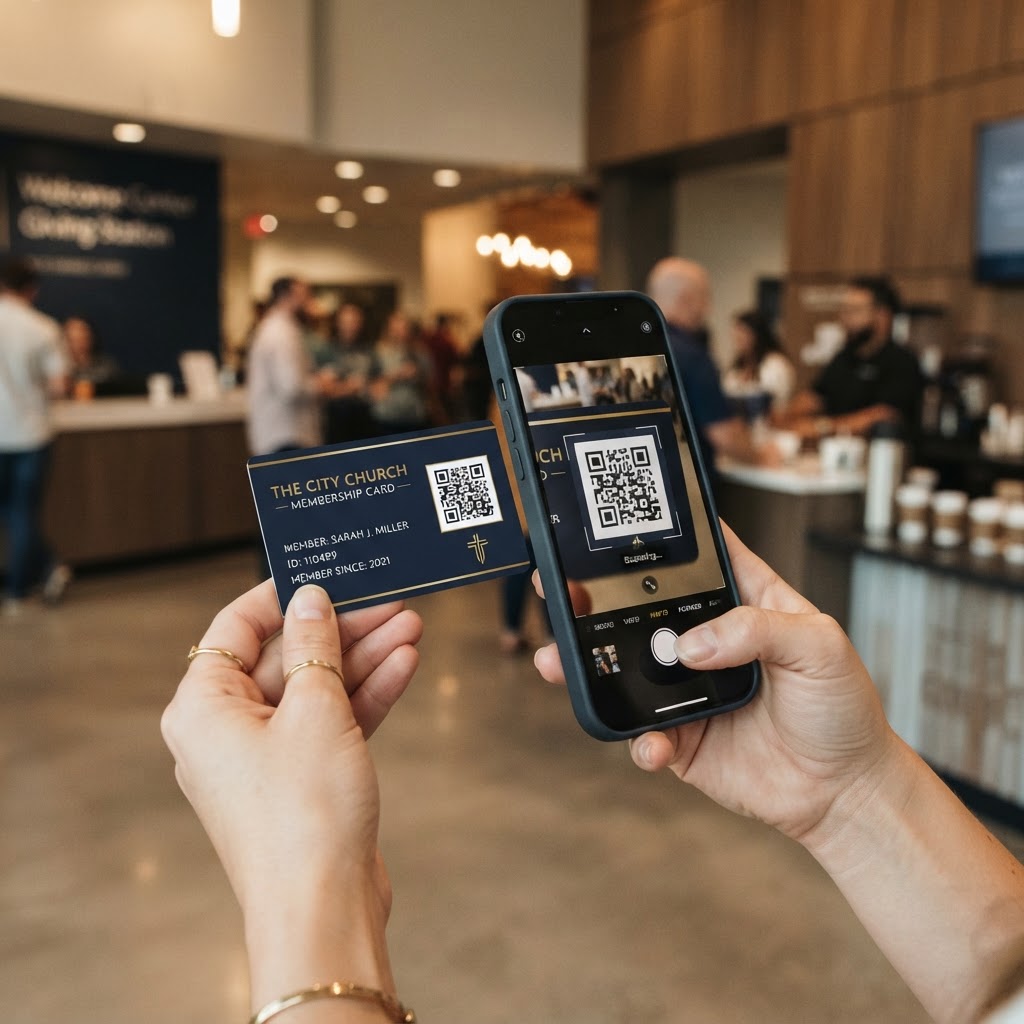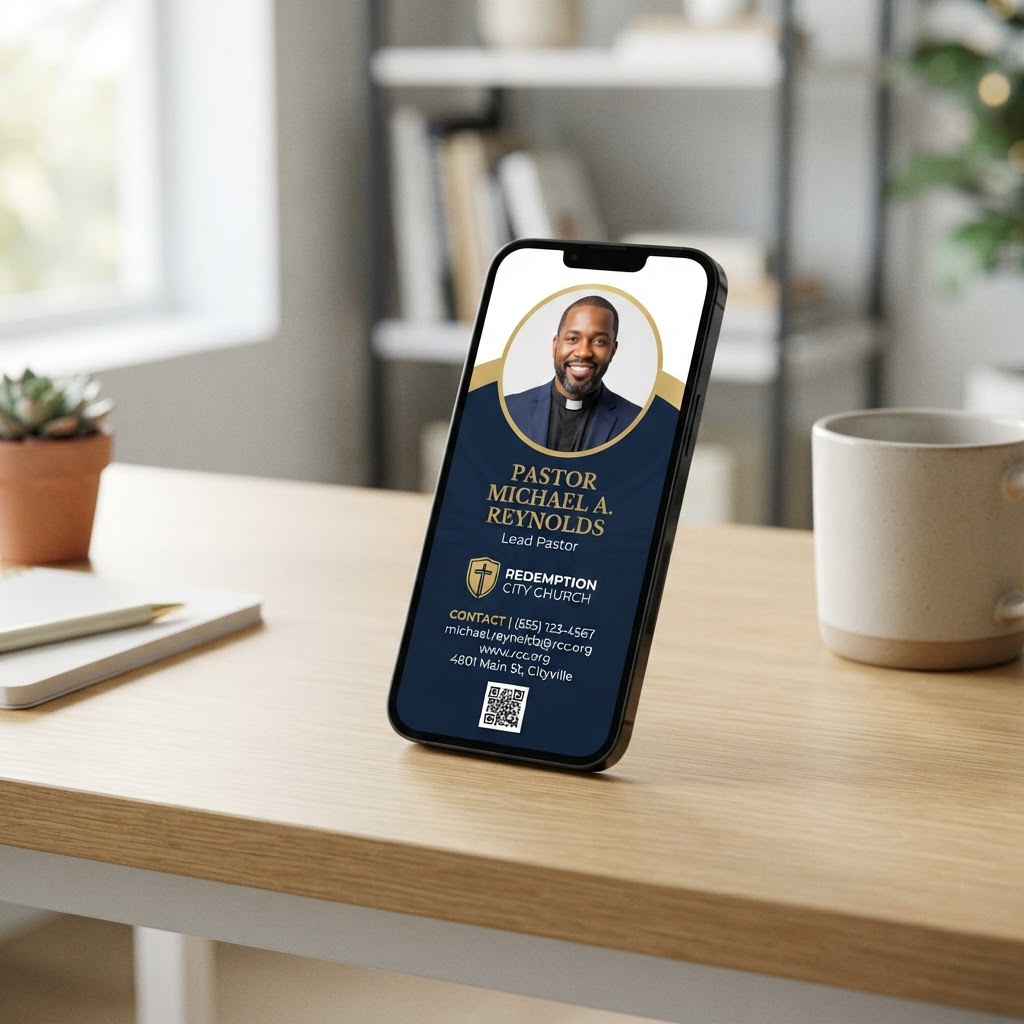
A ministry card is a digital identity tool that helps churches connect, communicate, and track engagement. Here's everything you need to know about this essential technology.
If you've heard the term 'ministry card' and wondered what it means, you're not alone. A ministry card is a digital identity and communication tool designed specifically for churches and ministry organizations. It combines the functionality of a business card, a membership card, and a communication hub into a single, mobile-optimized profile that lives on a smartphone. In this guide, we'll explain exactly what a ministry card is, how it works, and why thousands of churches are adopting them.
What Is a Ministry Card?
A ministry card is a digital profile — accessible via link or QR code — that contains a church leader's or member's contact information, photo, role, bio, and actionable links. Unlike a paper business card, a ministry card is always up to date, instantly shareable, and trackable. It can be opened on any smartphone without requiring an app download.
Each ministry card typically includes the person's name, title or role within the church, phone number, email address, photo, church logo, and a set of action buttons — such as 'Save to Contacts,' 'Give Online,' 'Plan a Visit,' or 'Submit a Prayer Request.' When someone scans the QR code or taps the link, the ministry card opens in their phone's browser, displaying a polished, branded profile.
How a Ministry Card Works
The ministry card workflow is simple but powerful. A church creates digital cards for its staff and ministry leaders using a platform like Ministry Cards. Each card is assigned a unique URL and QR code. When a member or visitor scans the QR code or receives the link, the card opens instantly on their device.
From the ministry card, the recipient can save the person's contact information to their phone with a single tap using vCard technology, click action buttons to give, register for events, or learn more about the church, and share the card with others via text or social media. Every interaction is tracked, providing the church with engagement analytics.
What Makes a Ministry Card Different from a Business Card?
While a ministry card serves a similar purpose to a traditional business card — sharing contact information — it does far more. Here's how they compare:
- Always current: A ministry card updates in real time. Change a phone number once, and every shared link reflects the update instantly. Paper cards become outdated the moment they're printed.
- Interactive: Action buttons let recipients take immediate next steps — give, register, connect — right from the card.
- Trackable: Every view, click, and contact save is recorded, giving churches data that paper cards simply cannot provide.
- Shareable: A ministry card can be forwarded via text, email, or social media with a single tap, extending its reach far beyond in-person encounters.
- Branded: Ministry cards use the church's logo, colors, and fonts, creating a consistent visual identity across every leader's card.
- Eco-friendly: Digital cards eliminate paper waste, supporting environmental stewardship.
Who Uses Ministry Cards?
Pastoral Staff
Pastors and church staff use ministry cards as their primary contact sharing tool. When a pastor meets a visitor after a service, they share their ministry card via QR code. The visitor saves the pastor's contact information with one tap and has a direct line to reach out during the week.
Ministry Leaders
Worship leaders, youth pastors, children's ministry directors, and small group leaders all benefit from having their own ministry cards. Each card can include action buttons relevant to their specific ministry area — a youth pastor's card might include 'Register for Youth Camp,' while a worship director's card might include 'Join the Worship Team.'
Volunteers and Greeters
Even volunteers can use ministry cards. Greeters at the welcome desk can have a church-wide welcome card that includes service times, next steps for visitors, and a connection form. This ensures every visitor receives the same professional, consistent welcome experience.
Key Features of a Ministry Card
Not all ministry cards are created equal. A quality ministry card platform should offer:
- Customizable branding — logo, colors, fonts, and background images
- QR code generation for each card
- vCard export for one-tap contact saving
- Action buttons for giving, registration, and connection
- Engagement analytics — views, clicks, and contact saves
- Mobile-first design optimized for smartphone viewing
- Directory integration for searchable staff and member listings
- Real-time updates without reprinting or redistribution
Why Churches Are Adopting Ministry Cards
The adoption of ministry cards is driven by several factors. First, smartphone usage is nearly universal — over 90% of adults own a smartphone, making digital cards accessible to virtually everyone. Second, the cost savings are significant: churches save hundreds to thousands of dollars annually by eliminating paper business cards, printed directories, and welcome packets.
Third, the engagement data that ministry cards provide is transformative. For the first time, churches can see which leaders are most engaged with, which action buttons get the most clicks, and how visitors find their cards. This data enables data-driven ministry decisions that were previously impossible.
Finally, ministry cards meet the expectations of younger generations. Millennials and Gen Z expect mobile-first, frictionless experiences. A church that hands them a paper business card feels outdated; a church that shares a polished ministry card via QR code feels relevant and professional.
Getting Started with Ministry Cards
Implementing ministry cards in your church is straightforward. Choose a platform designed for ministries — like Ministry Cards — that offers the features outlined above. Create cards for your pastoral staff first, then expand to ministry leaders and volunteers. Train your team on how to share their cards via QR code and link. Display QR codes at your welcome desk, on signage, and on projection screens.
Once your ministry cards are live, review the analytics regularly to understand engagement patterns and optimize your cards over time. The result is a more connected, more professional, and more effective ministry — all powered by a simple but powerful tool: the ministry card.