Smartphones are no longer distractions in church — they're tools for deeper engagement. Here's how mobile technology is transforming worship experiences.
For years, smartphones were seen as a distraction in church — devices to be silenced and tucked away during worship. But in 2026, that perception has shifted dramatically. Mobile technology is now an integral part of the modern worship experience, enabling deeper engagement, seamless giving, instant connection, and interactive participation. Far from being a distraction, the smartphone has become a tool for worship.
From Distraction to Engagement Tool
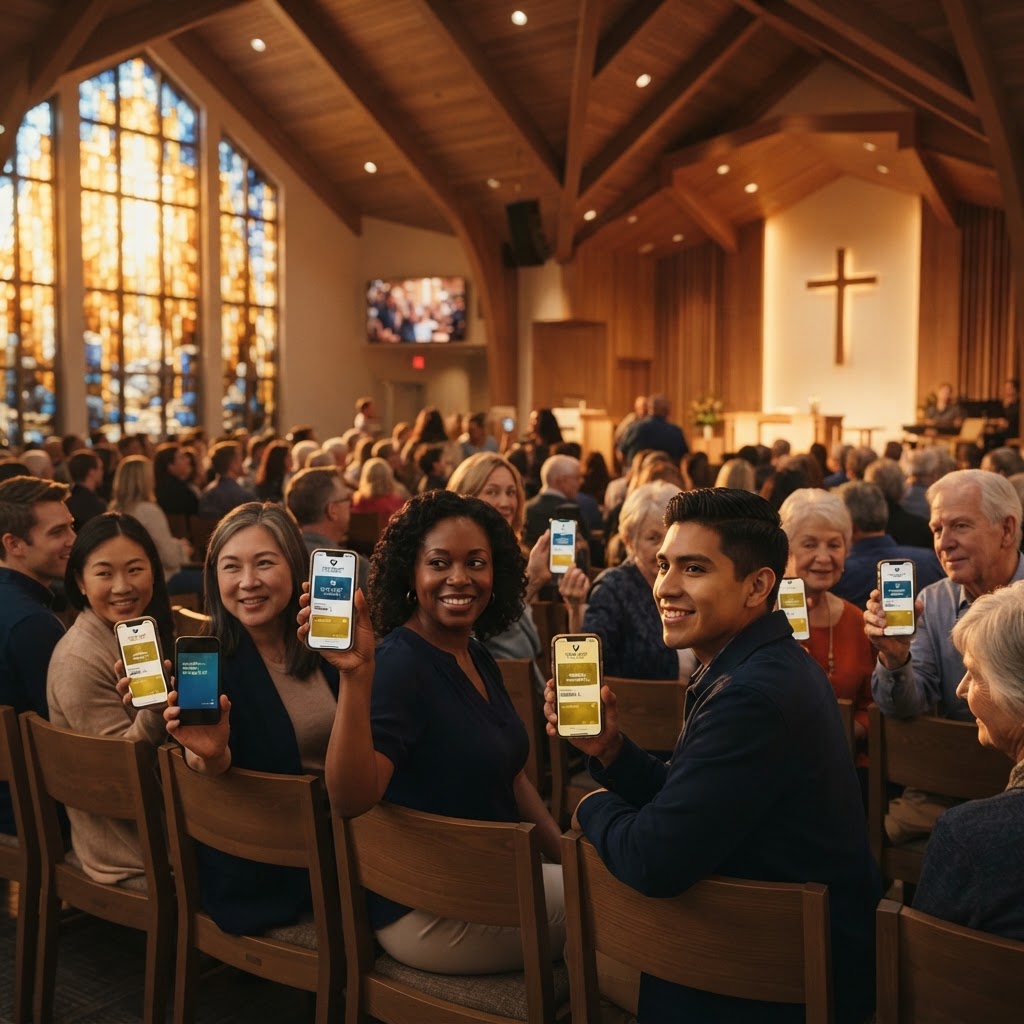
The shift began when churches recognized a simple reality: their members were going to use their phones during services regardless. The question wasn't whether to allow phones, but whether to channel that behavior toward meaningful engagement. By providing mobile-friendly tools — digital bulletins, QR code access to sermon notes, digital giving platforms, and digital membership cards — churches transformed the smartphone from a distraction into a participation tool.
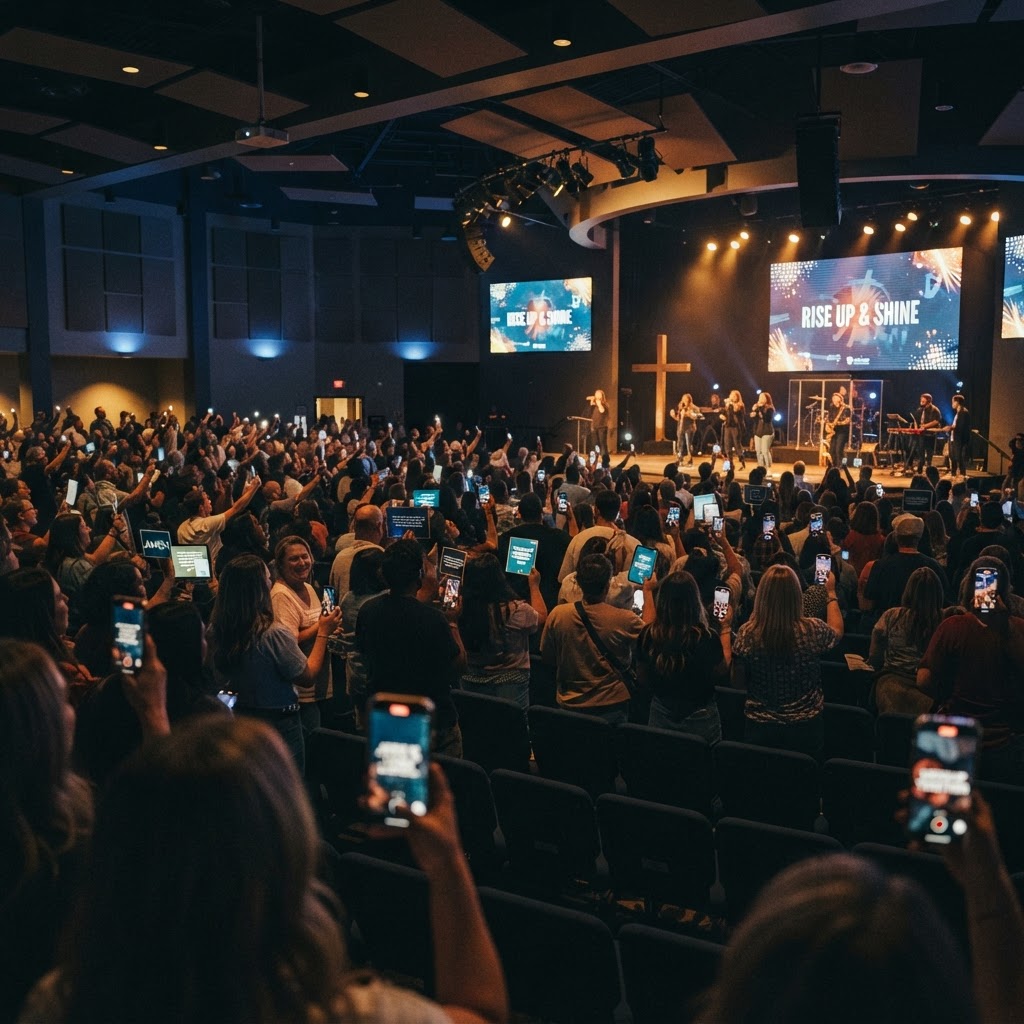
Today's worshippers use their phones to follow along with sermon notes, look up Bible passages, take photos of slides they want to remember, give online, and save contact information for church leaders they meet. Each of these activities deepens engagement rather than detracting from it.
Mobile Touchpoints in the Worship Experience
Digital Bulletins and Sermon Notes
Many churches now offer digital bulletins accessible via QR code. Members scan the code on their way in and follow along with the service order, sermon notes, and announcements on their phone. Digital bulletins can include interactive elements — links to register for events, give online, or access additional resources — that paper bulletins simply cannot offer.
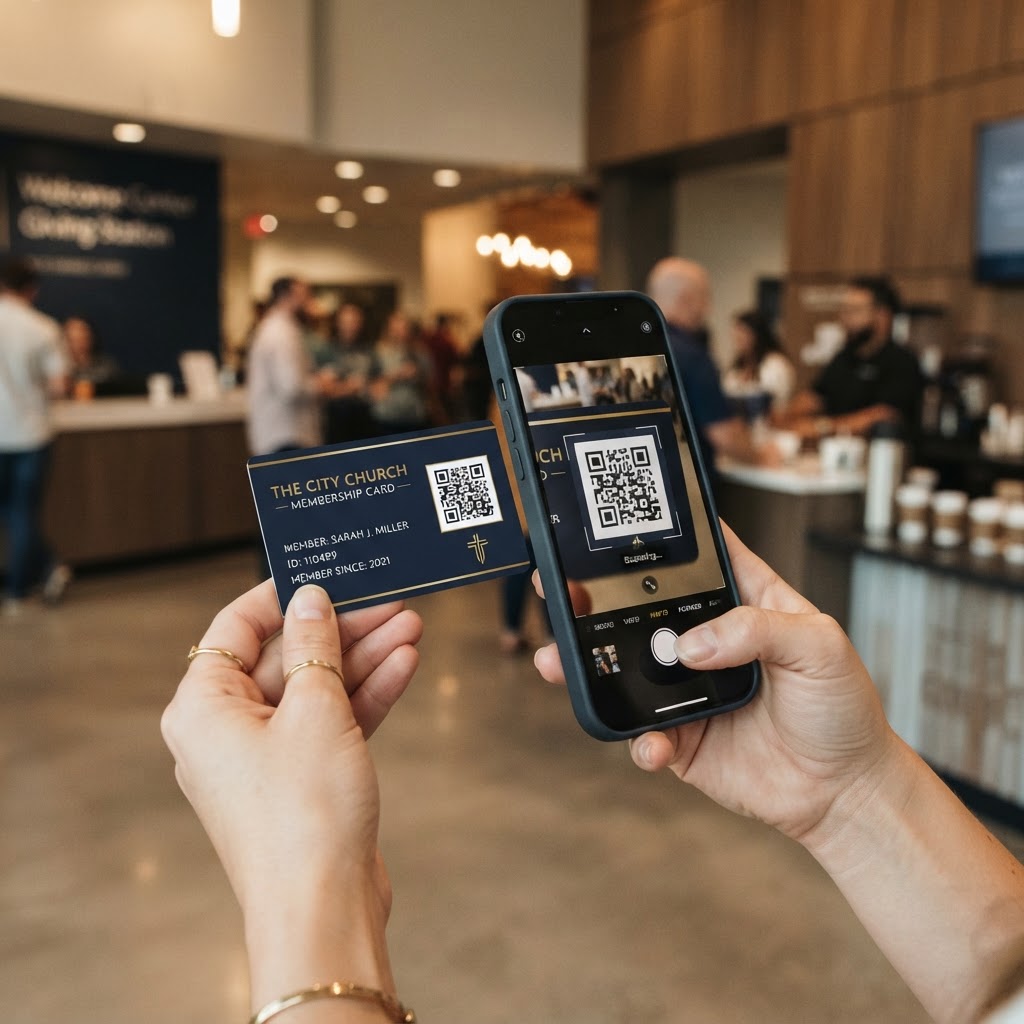
Digital Membership Cards for Leaders
When church leaders have digital membership cards, members can access their contact information anytime. During a service, a member might scan a QR code on the back of the pew to access a pastor's digital card, save it to their contacts, and reach out later in the week. This seamless connection between the worship experience and personal follow-up is one of the most powerful applications of mobile technology in church.
Mobile Giving
Mobile giving has transformed how churches collect tithes and offerings. Instead of passing a physical offering plate (which fewer and fewer people carry cash for), churches can offer mobile giving through their digital cards, website, or a dedicated giving app. Members can give with a few taps, set up recurring donations, and track their giving history — all from their phone.
During services, churches can display a QR code on the projection screen that links directly to the giving page. This reduces friction and makes it easy for visitors and members alike to contribute in the moment.
Interactive Sermon Engagement
Some churches are experimenting with interactive sermon elements that leverage mobile technology. Members can submit questions in real time, respond to polls, or access supplemental materials related to the sermon topic. While this approach isn't right for every church culture, it demonstrates how mobile technology can make worship more participatory and engaging.
The Welcome Experience
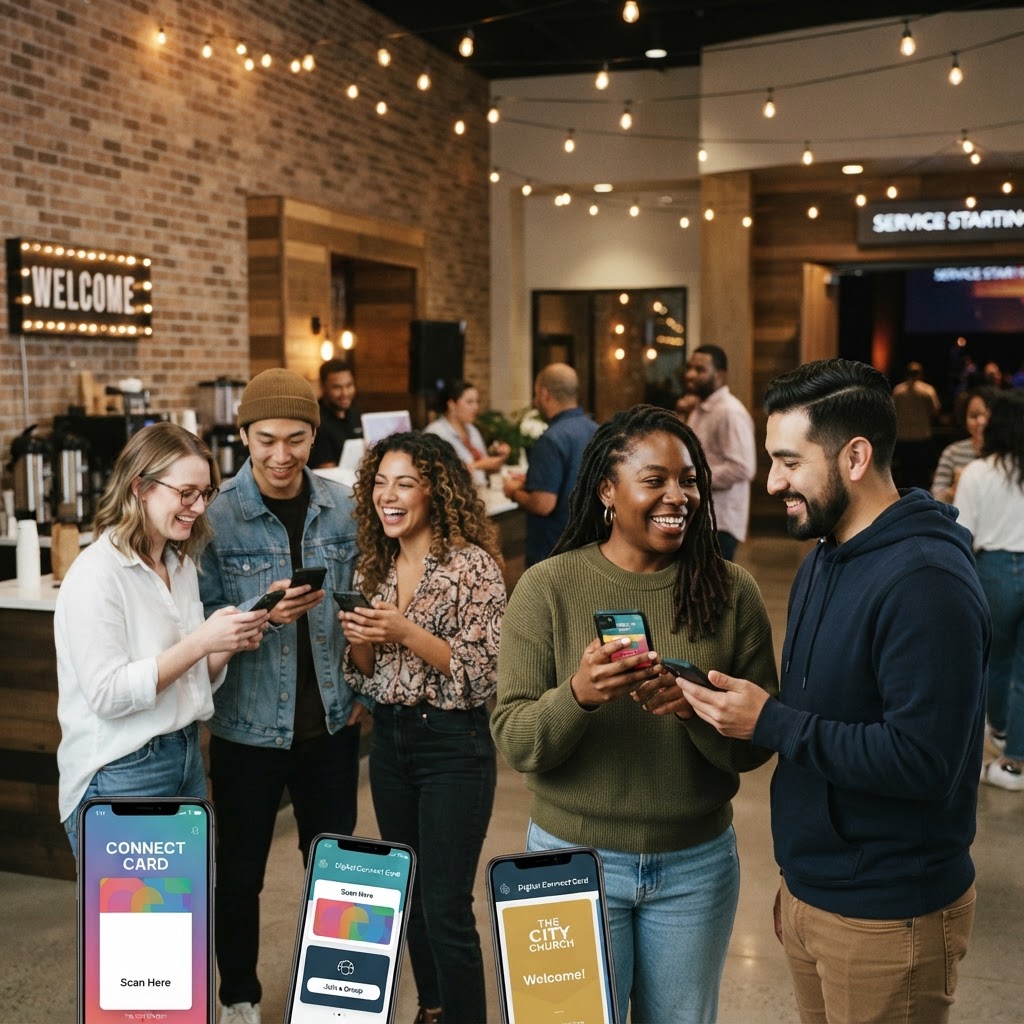
Mobile technology has transformed the church welcome experience for first-time visitors. Instead of filling out a paper connection card, visitors can scan a QR code that opens a digital welcome card. This card provides information about the church, service times, upcoming events, and ways to get connected — all on the device they're already comfortable using.
The digital welcome card can include action buttons that let visitors take immediate next steps: 'Plan My Next Visit,' 'Join a Small Group,' or 'Talk to a Pastor.' This instant, frictionless engagement dramatically improves the likelihood that a visitor will take a next step toward deeper involvement.
Post-Service Connection
After the service, mobile technology continues to facilitate connection. Members who met a new visitor can share the pastor's digital card via text message with a single tap. The visitor saves the contact and now has a direct line to the pastor. Automated follow-up messages can be triggered based on the visitor's interactions with the digital welcome card — if they clicked 'Join a Small Group,' they receive information about nearby groups within 24 hours.
This post-service connection was previously limited by the church's ability to manually follow up with each visitor. Mobile technology automates and personalizes this process, ensuring no visitor falls through the cracks.
Balancing Technology and Presence
While mobile technology enhances worship in many ways, it's important to maintain balance. The goal is not to replace human connection with digital interaction, but to use technology as a bridge to deeper relationships. Here are some guidelines for maintaining that balance:
- Design mobile experiences that facilitate, not replace, face-to-face interaction
- Encourage members to use phones for engagement, not distraction, during services
- Use mobile technology to handle administrative tasks so staff can focus on pastoral care
- Ensure that digital tools are accessible to members who are less comfortable with technology
- Regularly evaluate whether your mobile tools are enhancing or detracting from the worship experience
The Future of Mobile Worship
As mobile technology continues to evolve, we can expect even deeper integration between smartphones and worship experiences. Augmented reality could bring Bible stories to life in visual ways. AI-powered tools could provide personalized devotionals based on a member's engagement patterns. Location-based notifications could welcome members as they arrive at church and provide relevant information about the day's service.
While these technologies may seem futuristic, they're closer than they appear. Churches that begin building their mobile infrastructure today — starting with digital membership cards and QR code integration — will be well-positioned to adopt these innovations as they mature.
Embracing the Mobile-First Future
The smartphone is not the enemy of worship — it's a tool that, when used intentionally, can deepen engagement, facilitate connection, and extend the impact of every service. Churches that embrace mobile technology as part of their worship experience are not compromising tradition; they're meeting their members where they are and using every available tool to build meaningful, lasting connections.
The question for church leaders is no longer whether to integrate mobile technology into worship, but how to do it in a way that honors the sacred while embracing the practical. The answer, as it turns out, is simpler than you might think: start with the basics — digital cards, QR codes, mobile giving — and let the technology serve the mission, not the other way around.