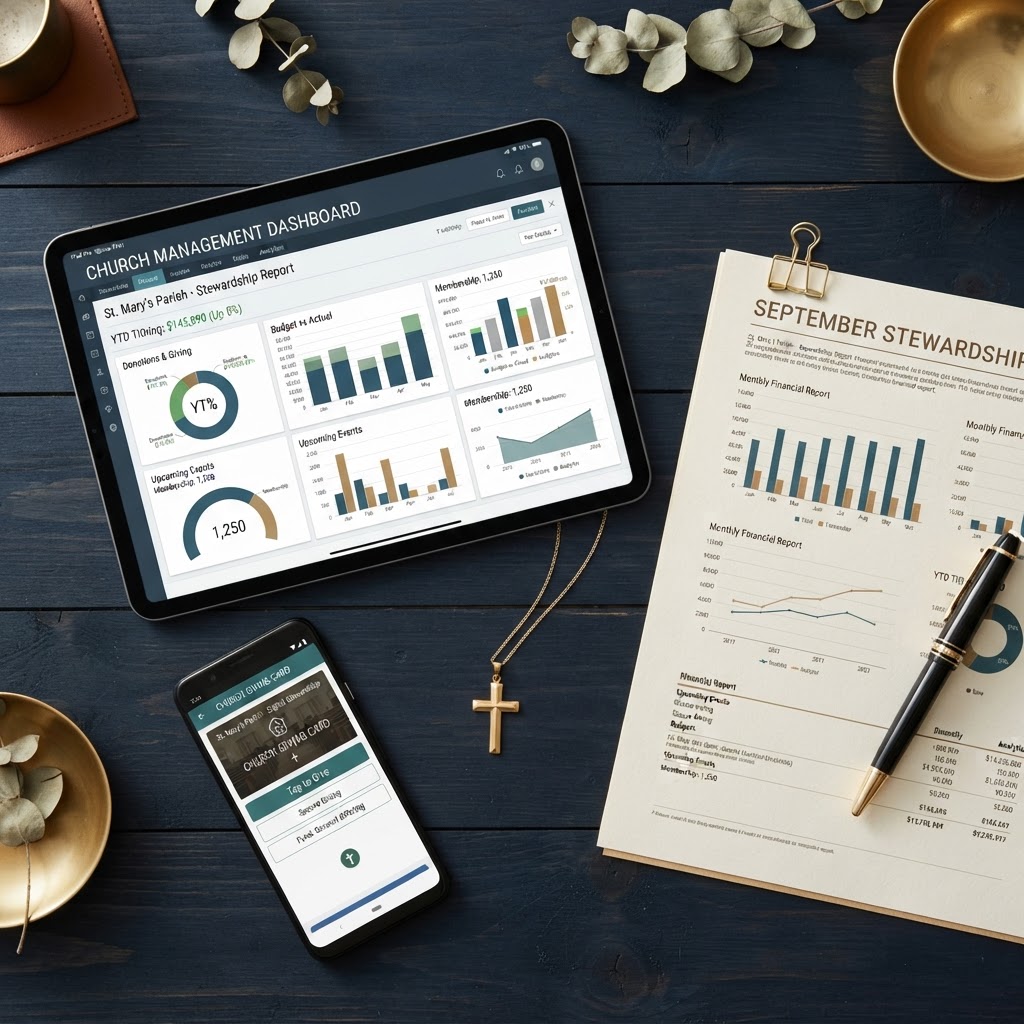
Stewardship isn't just about finances — it's about managing every resource God has entrusted to your church. Here's how technology enables better stewardship.
Stewardship is a foundational principle of church leadership — the faithful management of the resources entrusted to a ministry. Traditionally, church stewardship has focused primarily on finances: budgeting, giving, and expense management. But in the digital age, stewardship encompasses much more. It includes how churches manage their data, their digital presence, their staff time, and their environmental impact. Digital stewardship is about using technology to manage all of these resources more faithfully and effectively.
What Is Digital Stewardship?
Digital stewardship is the intentional, responsible use of technology to manage and multiply the resources God has entrusted to your church. It encompasses financial stewardship (using digital tools to track and optimize spending), time stewardship (automating repetitive tasks to free staff for ministry), data stewardship (protecting and leveraging member information ethically), and environmental stewardship (reducing waste through paperless solutions).
At its core, digital stewardship asks: Are we using the tools available to us in the best possible way to advance our mission? For many churches, the answer is no — not because they're careless, but because they haven't thought holistically about how technology can improve their stewardship.
Financial Stewardship Through Digital Tools
Reducing Printing Costs
One of the most immediate financial stewardship wins is eliminating unnecessary printing. As we discussed in our paperless church guide, the average church spends $2,800 to $7,700 per year on paper materials. Digital membership cards, digital bulletins, and online forms eliminate most of these costs, freeing up budget for ministry and missions.
Digital Giving Platforms
Digital giving platforms make it easier for members to give consistently, which improves financial stability. More importantly, they provide data on giving patterns that help church leaders budget more accurately. When you can see giving trends in real time, you can make proactive financial decisions rather than reactive ones.
Cost-Per-Engagement Tracking
Digital tools allow churches to calculate the cost per engagement for different ministry activities. How much does it cost to connect with one visitor through your welcome packet versus a digital card? How much does each small group connection cost to facilitate? Understanding these metrics helps churches allocate resources to the most effective ministries.
Time Stewardship Through Automation
Pastoral staff time is one of a church's most valuable — and most limited — resources. Yet many churches still rely on manual processes that consume hours of staff time every week. Digital tools can automate many of these tasks:
- Visitor follow-up: Automated text and email sequences replace manual phone calls and letters
- Event registration: Online forms replace paper sign-ups and manual data entry
- Contact information updates: Digital cards update automatically, eliminating reprinting and redistribution
- Member directories: Digital directories update in real time, eliminating the annual directory reprinting project
- Prayer request routing: Digital forms automatically route prayer requests to the appropriate pastoral staff member
Each of these automations saves hours of staff time per week. Over a year, that's hundreds of hours redirected from administrative tasks to pastoral care, discipleship, and outreach.
Data Stewardship and Ethical Responsibility
Churches collect significant amounts of personal data: names, addresses, phone numbers, email addresses, giving history, and family information. Digital stewardship includes the ethical responsibility to protect this data and use it wisely.
This means choosing technology platforms that take data security seriously — encrypted storage, secure access controls, and clear privacy policies. It also means being transparent with members about what data you collect and how you use it. Trust is hard to earn and easy to lose, and a data breach or misuse of member information can damage a church's reputation for years.
Digital stewardship also means using data to better serve members, not to manipulate them. Analytics from digital cards and engagement tools should be used to identify members who need pastoral care, understand which ministries are most effective, and improve the member experience — not to pressure members into giving or attending.
Environmental Stewardship Through Paperless Ministry
Environmental stewardship is an often-overlooked aspect of church resource management. Yet caring for creation is a biblical mandate, and reducing paper waste is a tangible way churches can live out that value. As we detailed in our paperless church guide, the average church uses 60,000 to 180,000 sheets of paper per year — the equivalent of 7 to 21 trees.
By switching to digital membership cards, digital bulletins, and online forms, churches can dramatically reduce their environmental footprint while also saving money. This is digital stewardship at its best: a decision that is simultaneously financially responsible, environmentally faithful, and operationally superior.
Implementing a Digital Stewardship Strategy
Becoming a digitally faithful church doesn't happen overnight. It requires intentional planning and a commitment to stewardship at every level. Here's how to get started:
Audit Your Current Resources
Start by understanding where your church's resources are currently going. How much do you spend on printing? How many hours per week does staff spend on manual data entry? What digital tools are you currently using, and are they integrated or siloed?
Identify High-Impact Opportunities
Look for areas where digital tools can have the biggest impact on stewardship. For most churches, the top three opportunities are: replacing paper materials with digital alternatives, automating visitor follow-up, and implementing a digital membership card program.
Invest in the Right Tools
Choose technology platforms that align with your stewardship values. Look for tools that are affordable, secure, user-friendly, and designed with churches in mind. Avoid platforms that lock you into long contracts or charge hidden fees.
Train Your Team
Technology is only as effective as the people using it. Invest time in training your staff and volunteers on new digital tools. Provide ongoing support and celebrate wins as your team becomes more digitally fluent.
The Heart of Digital Stewardship
Ultimately, digital stewardship is not about technology — it's about faithfulness. It's about recognizing that every resource your church has — money, time, data, and the environment — is a trust to be managed wisely. Technology is simply a tool that, when used well, enables more faithful stewardship.
As you evaluate your church's digital practices, ask not just 'Is this efficient?' but 'Is this faithful?' When the answer is yes, you're practicing true digital stewardship — and your ministry will be stronger for it.