The digital business card market is valued at $238 million in 2026. Here are 30 statistics that explain why churches are making the switch from paper to digital.
The shift from paper business cards to digital business cards is one of the most significant trends in professional networking today. But how big is this shift, really? In this article, we've compiled 30 key digital business card statistics for 2026 that reveal the scale, speed, and impact of the paperless revolution. Whether you're a church leader evaluating digital membership cards or a ministry director building a case for going paperless, these data points will inform your decision.
Market Size and Growth
The digital business card market is growing rapidly, with multiple research firms tracking its expansion. The numbers tell a clear story: this is not a passing trend but a fundamental shift in how people share contact information.
- The global digital business card market is valued at approximately $238 million in 2026, growing at a 12.2% compound annual growth rate (CAGR).
- The market is projected to exceed $680 million by 2035 — nearly tripling in less than a decade.
- The NFC business card segment alone was worth $19.47 million in 2023 and is projected to hit $50 million by 2030.
- The US business card printing market generates roughly $800 million per year — but that figure has shrunk by about 70% from pre-pandemic levels.
- 100 billion paper business cards are still printed annually worldwide, with 27 million printed daily in the US alone.
Adoption Rates
Adoption of digital business cards has accelerated dramatically since 2020. The pandemic was a tipping point — once people became comfortable with contactless interactions, paper cards felt increasingly outdated.
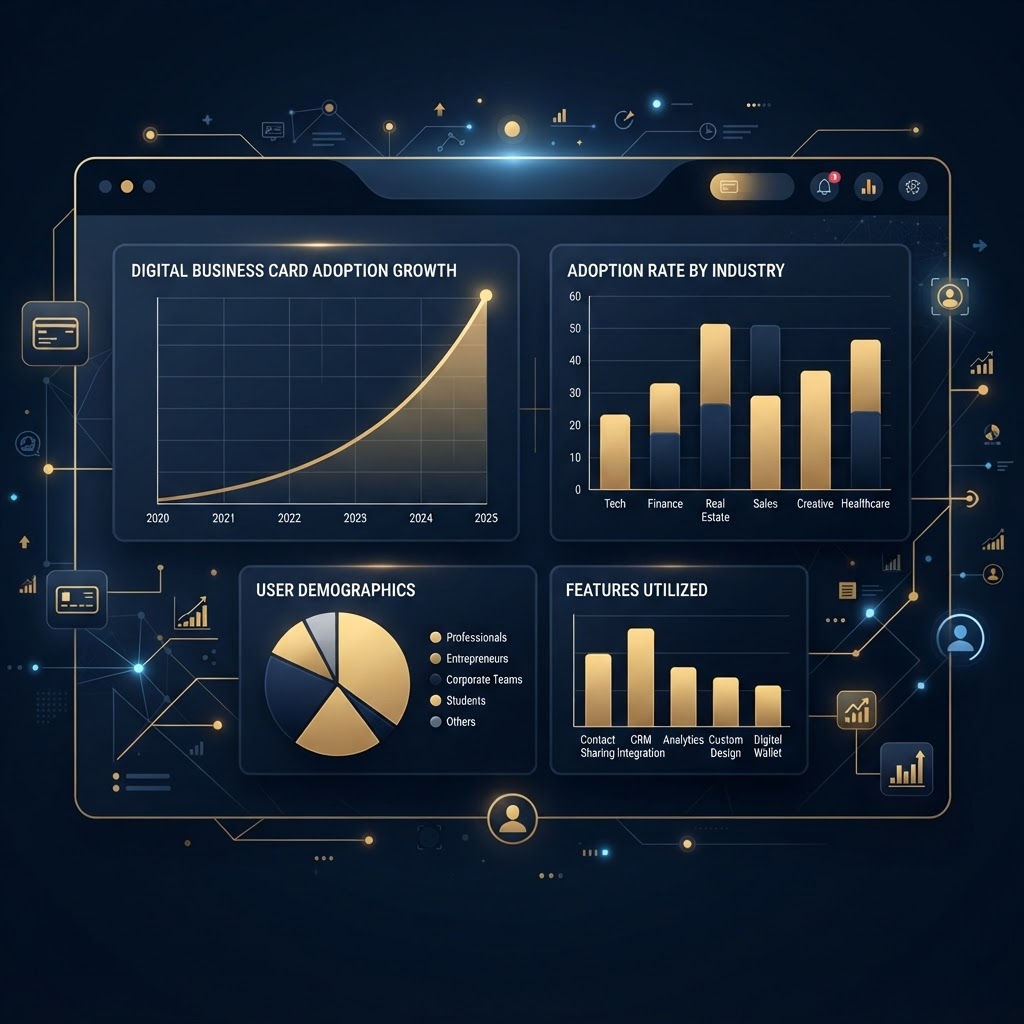
- 37% of businesses have adopted digital business cards in 2026, up from just 16% in 2020 — more than doubling in five years.
- Technology companies lead adoption at 72%, while manufacturing sits at just 28%.
- The IT sector accounts for roughly 40% of the entire global digital business card market.
- 63% of millennials prefer digital cards over paper — a generational shift that will only accelerate as Gen Z enters the workforce.
- 82% of remote workers consider digital cards essential for virtual networking.
- 48% of professionals use digital cards at conferences, and 42% use them at networking events.
- 23% of individuals (non-business) now use digital business cards, including freelancers, job seekers, and side hustlers.
The Problem with Paper Business Cards
The statistics on paper business card waste are staggering. These numbers alone make the case for going digital:
- 88% of paper business cards are thrown away within one week of being received.
- Paper business card printing volumes dropped 65-70% during the COVID-19 pandemic and haven't fully recovered.
- 72% of people judge a company based on their business card quality, and 39% will decline to do business with someone whose card looks cheap or outdated.
- Paper cards cost approximately $2.00 per card when you factor in design, printing, and shipping.
- Companies spend an average of $64.23 per employee per year on paper business cards.
Cost Savings and ROI
The financial case for digital business cards is compelling. Churches and businesses that switch report dramatic cost savings and measurable returns on investment:
- Companies switching to digital business cards report up to 90% cost reduction over traditional printed cards.
- A digital card share costs approximately $0.08, compared to $2.00 per paper card — a 96% savings per contact exchange.
- The digital equivalent of paper business cards runs about $48 per employee annually, compared to $64.23 for paper — a 26% savings before factoring in time savings.
- Businesses report a 45% reduction in time spent on contact management after switching to digital cards.
- Companies using digital cards experience a 90% reduction in printing and distribution costs.
- Most teams see positive ROI within the first quarter of switching to digital cards.
Engagement and Retention
Digital business cards don't just save money — they improve engagement and connection rates in ways paper cards cannot:
- Digital cards drive a 35% improvement in follow-up rates compared to traditional cards.
- Recipients of digital business cards are 55% more likely to retain contact information compared to those who receive paper cards.
- Digital cards are 700% more likely to be shared with others compared to paper cards.
- NFC-enabled cards retain users 50% better than QR-only options.
- 92% of companies report that digital business cards improved brand consistency across their teams.
- Nearly 80% of patients in healthcare settings prefer physicians using digital cards.
Environmental Impact
The environmental case for digital business cards is as strong as the financial case. Every church that goes paperless contributes to a significant reduction in waste:
- Digital card adoption saves an estimated 7 million trees annually worldwide.
- A 10,000-employee company switching to digital saves approximately 125 trees, 50,000 gallons of water, 7,425 pounds of waste, and 7,500 pounds of carbon per year.
- Producing one ton of paper requires approximately 20,000 gallons of water and 4,000 kilowatt-hours of electricity.
What These Statistics Mean for Churches
For churches, these statistics translate directly into ministry impact. When your church switches to digital membership cards, you can expect:
- Significant cost savings that can be redirected toward ministry and missions
- Higher follow-up rates with visitors, leading to better retention
- Better contact retention among members — they're 55% more likely to keep your pastors' contact information
- Improved brand consistency across all staff and ministry leaders
- A measurable reduction in environmental impact, supporting your church's stewardship values
- Valuable engagement analytics that paper cards simply cannot provide
The Bottom Line
The data is clear: digital business cards are not a fad — they're the future of professional and ministry networking. With 37% of businesses already adopted, a $238 million market growing at 12% annually, and measurable improvements in cost savings, engagement, and environmental impact, the case for going digital is overwhelming.
For churches, the question isn't whether to adopt digital membership cards, but how quickly. Every month you delay is another month of wasted paper, missed connections, and unnecessary printing costs. The statistics speak for themselves — and they're all pointing in one direction: digital.