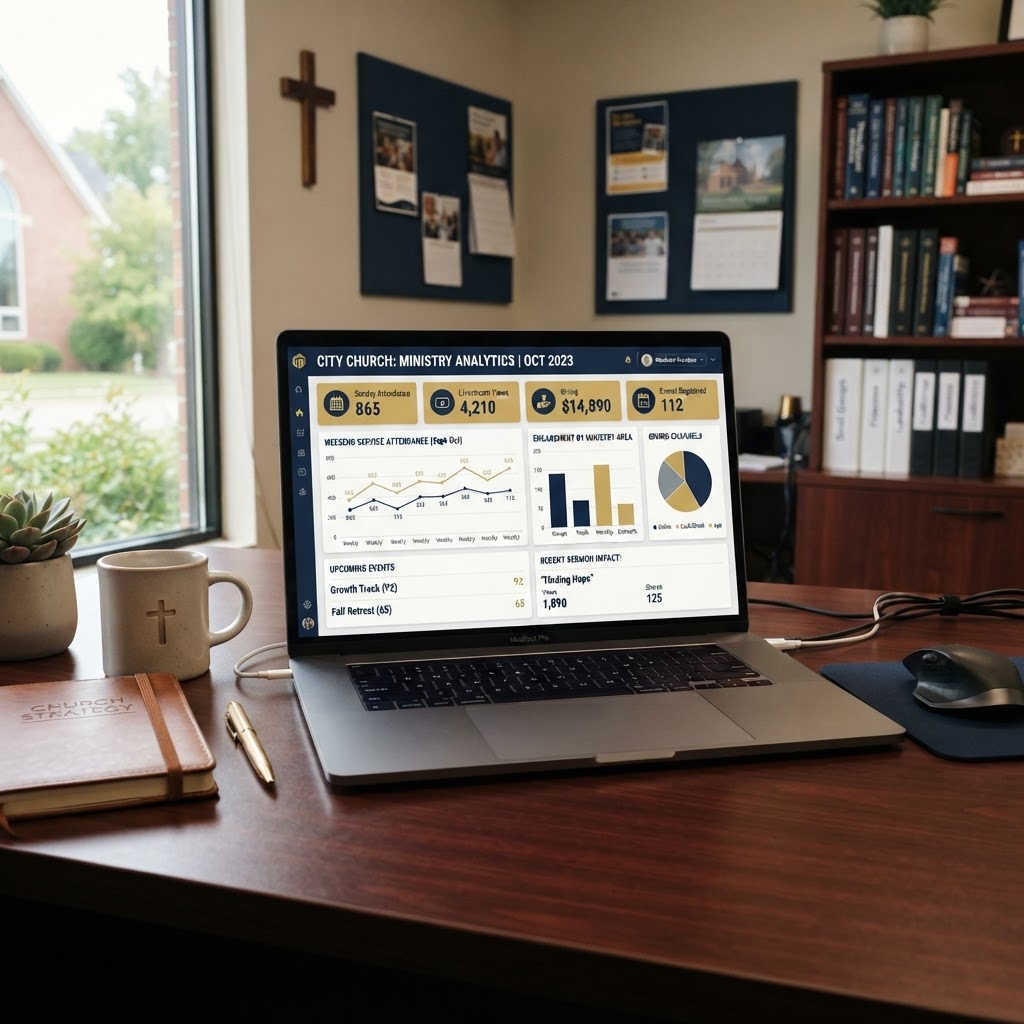
Data-driven insights help you understand how members interact with your digital cards and content. Learn how analytics can transform your ministry.
For most of church history, measuring member engagement has been a guessing game. Pastors could count attendance on Sunday, track giving, and note who volunteered — but the day-to-day interactions between members and ministry leaders were largely invisible. Digital card analytics changes that, giving churches unprecedented visibility into how members engage with their ministry throughout the week.
What Digital Card Analytics Measures
When your church uses digital membership cards, every interaction generates data. Here are the key metrics you can track:
Card Views
The total number of times a digital card has been viewed. This metric tells you how much exposure each leader's card is getting and which cards are generating the most interest. A card with high views but low action clicks might need better call-to-action buttons.
Unique Visitors
The number of distinct individuals who have viewed a card. This differs from total views because one person might view a card multiple times. Unique visitors give you a clearer picture of your actual reach.
Link Clicks
Which links on your digital cards are getting clicked most often. This is invaluable data. If your 'Give Online' button gets more clicks than your 'About Our Church' button, you know what your visitors care about. Use this data to optimize card layouts and prioritize the most important actions.
Visit Source
How people found the digital card — via QR code scan, direct link, social media, or directory listing. This helps you understand which distribution channels are most effective. If QR code scans generate the most engagement, you know to invest more in physical QR code placements.
vCard Downloads
How many people have saved a leader's contact information to their phone. This is one of the most valuable metrics — it indicates a genuine interest in staying connected. A high vCard download rate means your cards are effectively building lasting connections.
Using Analytics to Improve Ministry Outreach
Identify Your Most Engaged Members
By tracking which members repeatedly view cards, click links, and download contact information, you can identify your most engaged individuals. These are the people most likely to volunteer, give, or step into leadership roles. Use this data to personalize outreach and invite engaged members into deeper involvement.
Optimize Follow-Up Timing
Analytics show when card views and interactions peak. If you notice that most QR code scans happen on Sunday mornings and Tuesday evenings, you can time your follow-up communications for maximum impact. Reaching out within 24 hours of a card view significantly increases response rates.
Measure the Impact of Events
After a special event, conference, or outreach campaign, check your digital card analytics. Did card views spike? Did new visitors download vCards? This data helps you measure the real impact of your events beyond simple attendance numbers.
Identify Content Gaps
If certain action buttons on your digital cards consistently get few clicks, it may indicate that the linked content isn't relevant or compelling. Use this insight to refine your church's digital content strategy. Maybe your 'Events' page needs updating, or your 'Give' page is too complicated.
Building a Data-Driven Ministry Culture
Analytics are only valuable if you act on them. Here's how to build a culture of data-driven decision-making in your ministry:
- Review analytics monthly with your leadership team
- Set engagement goals — for example, aim for a 20% increase in vCard downloads over six months
- Compare analytics across different ministry leaders to identify best practices
- Share wins with your team — when analytics show growth, celebrate it
- Use data to justify budget requests for digital tools and resources
- Don't obsess over vanity metrics — focus on actions that indicate genuine engagement
Privacy and Ethics in Church Analytics
While analytics provide powerful insights, it's important to handle data ethically. Digital card analytics should track aggregate behavior patterns, not spy on individuals. Ensure your analytics platform respects privacy by anonymizing visitor data where possible and being transparent about what you track.
The goal of church analytics is not surveillance — it's stewardship. You're using data to better serve your congregation, not to monitor individuals. Always frame your analytics strategy around improving the member experience, not controlling it.
The Future of Ministry Analytics
As digital tools become more embedded in church life, the depth and quality of available analytics will only improve. Churches that learn to read and respond to this data today will be better positioned to serve their communities tomorrow. The question is no longer whether to use analytics in ministry — it's how quickly you can start.
By tracking member engagement with digital card analytics, your church can move from guesswork to insight, from reaction to intention, and from good intentions to measurable impact. That's the power of data-driven ministry.