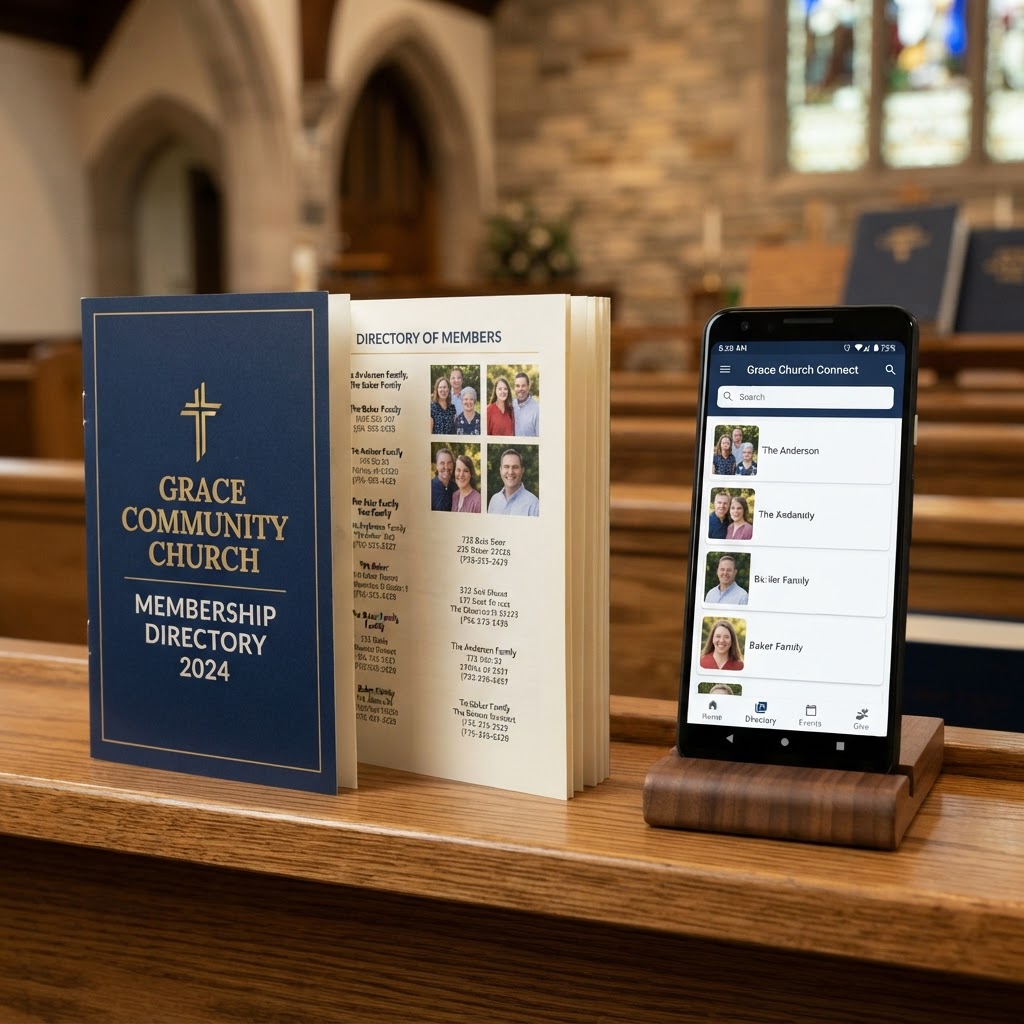
Still printing a church directory every year? Here's a side-by-side comparison of digital vs. printed directories to help you decide which is right for your church.
For generations, churches have produced printed directories — booklets of staff photos, names, and contact information distributed to members each year. In the digital age, many churches are asking: is a printed directory still worth it, or is it time to go digital? This side-by-side comparison will help you decide.
Cost
Printed directories are expensive. A professionally printed directory for a church of 200 members costs between $500 and $1,500, depending on quality, color, and quantity. And that's an annual cost — every year, you reprint. A digital directory, by contrast, is a low-cost subscription that's always current and infinitely scalable. For most churches, the digital directory pays for itself within the first year.
Updates
Printed directories are outdated the moment they come off the press. If a pastor changes their phone number in March, the directory printed in January is wrong for the rest of the year. Digital directories update in real time. Change the information once, and every member sees the update instantly — no reprinting, no errata, no confusion.
Accessibility
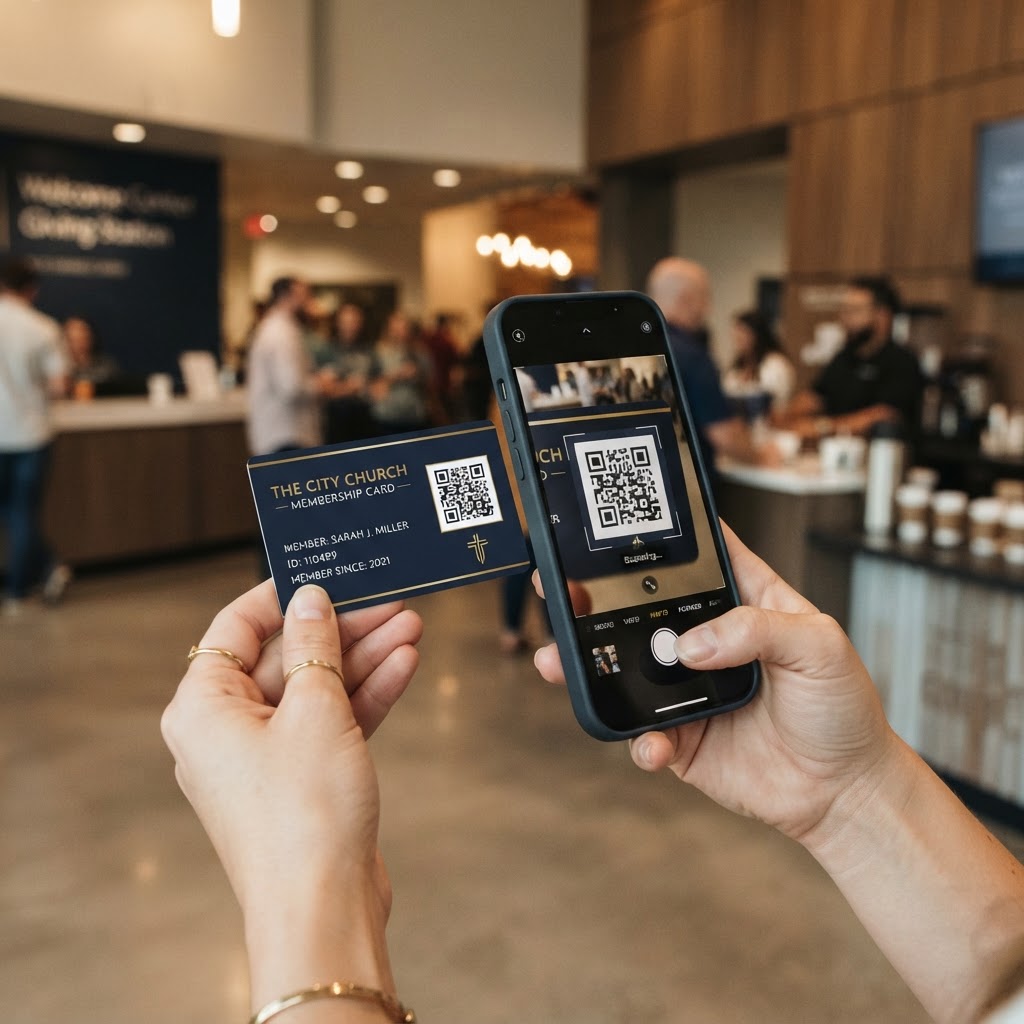
Printed directories live on a bookshelf or in a car glovebox — places members rarely look when they need a phone number. Digital directories live on the device members carry everywhere: their phone. With QR code access, members can open the directory in seconds, from anywhere. No more 'I left the directory at home.'
Search
Finding someone in a printed directory means flipping through pages alphabetically. If you don't know the person's last name, you're out of luck. Digital directories are searchable by name, title, or department. Type 'youth' and find the youth pastor instantly. This is especially valuable in larger churches where members don't know every staff member by name.
Analytics
Printed directories provide zero data. You have no idea if members use it, which profiles they look at, or whether the information is helpful. Digital directories provide rich analytics: how many people access the directory, which profiles are viewed most, what times of day members are most active. This data helps you optimize the directory and understand engagement patterns.
Environmental Impact
Printed directories consume paper, ink, and energy — and most end up in a landfill within a year. Digital directories have no physical footprint. For churches that value environmental stewardship, going digital is a meaningful sustainability choice.
Integration with Digital Cards
Digital directories can integrate with digital membership cards. When a member finds a staff member in the directory, they can view their full digital card and save contact information to their phone with one tap. Printed directories can't do this — members have to manually transcribe phone numbers and email addresses, which is tedious and error-prone.
When Printed Still Makes Sense
There are a few scenarios where a printed directory still adds value. For older members who aren't comfortable with smartphones, a printed directory ensures they're not left out. Some churches print a small batch for senior members while directing the rest of the congregation to the digital version. This hybrid approach respects all members' preferences while keeping costs low.
However, even for older members, digital directories are increasingly accessible. Smartphones are ubiquitous across all age groups, and QR code access is intuitive once demonstrated. Don't assume older members won't use a digital directory — give them the option and provide help if needed.
The Verdict
For the vast majority of churches, a digital directory is the clear winner. It's more cost-effective, always current, more accessible, searchable, and provides valuable analytics. Printed directories served their purpose for decades, but the digital alternative is simply better in every measurable way. If your church is still printing directories, it's time to consider making the switch.
The best approach? Go digital as your primary directory and offer printed copies only for members who specifically request them. This keeps costs low, ensures the directory is always current, and respects every member's preferences.